From Specs to Code with AI Agents. Specifications as the single source of truth.
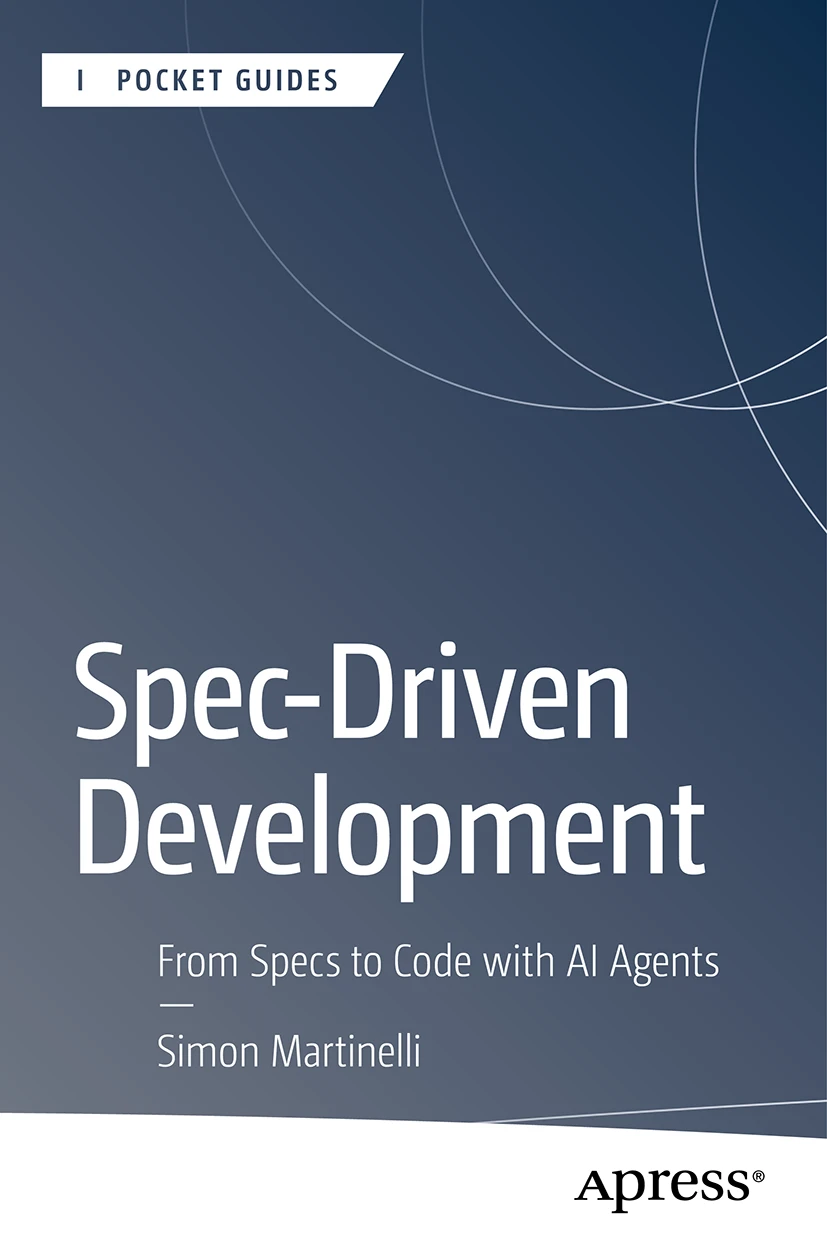
Traditional development is code-centric: specifications are written after the fact, if at all, and drift out of date the moment the code changes. The result is maintenance pain, stalled modernization, and systems that no longer match what the business needs. AI coding tools generate code faster, but they don't fix this underlying process problem.
Spec-Driven Development flips the model around. Specifications become the single source of truth that drives code, tests, and validation. The book introduces the AI Unified Process, a lightweight framework that makes spec-driven development practical with today's AI agents, and shows how emerging tools like Amazon Kiro and GitHub Spec Kit fit into the picture.
A hands-on case study runs through the whole book, taking you from requirements to executable code so you can see every step of the lifecycle in action, not just read about it.
Written for software developers, tech leads, and architects. Basic programming knowledge is all you need; no prior requirements engineering or AI tool experience is required.
Write specifications that are precise enough for AI agents yet light enough for real projects: living artifacts, not throwaway prompts.
Use specifications to drive code generation and testing, so the system's behavior is defined once and enforced everywhere.
Bring the methodology to your own projects and team workflows, including iterations, roles, and artifacts.
Put AI agents to work across the spec-driven lifecycle: generating, regenerating, and refactoring code, tests, and documentation.
Ten chapters from the why to the how, including a complete case study.
Apress, part of the Apress Pocket Guides series. Compact, practical, and focused.
August 2026. Available now in softcover and eBook formats.
Softcover: 979-8-8688-2850-8
eBook: 979-8-8688-2851-5
152 pages with 23 illustrations, including a complete hands-on case study from requirements to executable code.
A free companion guide: how to write use cases for stakeholders, engineers, and AI agents.
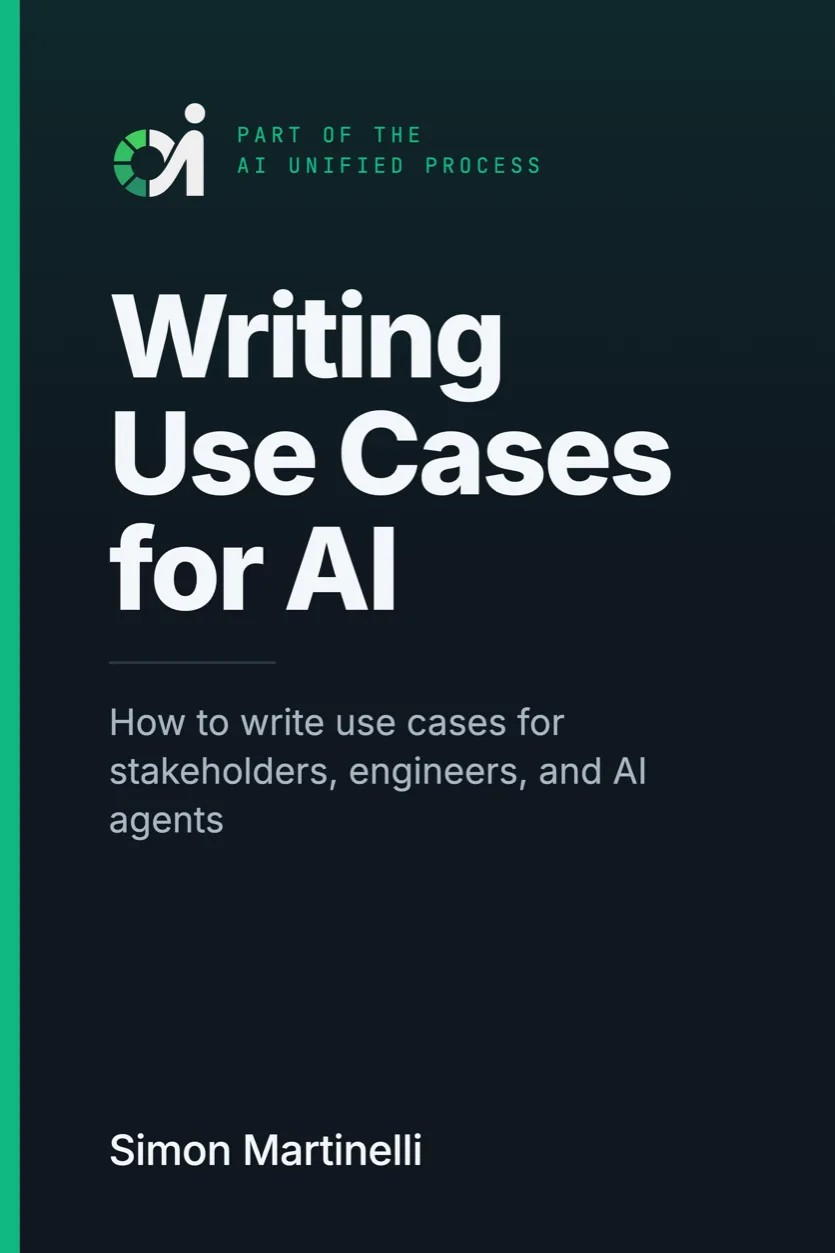
Writing the code is no longer the expensive part. Expressing intent precisely is. The use case is where that intent gets written down, and it now has three readers at once: the stakeholder who validates it, the engineer who reviews the implementation against it, and the AI agent that generates code from it. This guide shows how to write one specification that serves all three.
It builds on what you already know from Cockburn or Use-Case 3.0 instead of repeating it, and concentrates on what actually changes when an AI agent reads your use case: how precise to be, what to deliberately leave out, where use cases sit in the artifact chain of the AI Unified Process, and how they drive slices, tests, change requests, and brownfield work.
Eleven chapters with a complete specification template, a worked example, patterns for scenarios and alternative flows, checklists, and the mistakes that show up most often in review.
The guide is free. Leanpub lets you set your own price, and $0 is fine. You get PDF, EPUB, and in-browser reading, DRM-free and with free updates for as long as the guide is maintained. A German edition, Use Cases schreiben für KI, is available on the same terms.
The book is available now in softcover and eBook formats; the guide Writing Use Cases for AI is free. Want to go deeper? Workshops and consulting bring the AI Unified Process directly to your team.